Email Deliverability News Today: Latest Updates, Trends & Insights
Email marketing remains one of the most effective communication channels for businesses, but inbox placement has become more challenging. The latest Email Deliverability News Today shows that major mailbox providers are tightening authentication standards while increasing scrutiny on sender reputation. Businesses across the United States are paying closer attention to bounce rates, spam complaints, and engagement metrics because these factors now directly affect campaign performance. Understanding the newest shifts in email delivery can help marketers protect their sender reputation and improve inbox success rates in a rapidly changing digital environment.
Why Email Deliverability Matters More Than Ever
The importance of email deliverability has increased because businesses rely heavily on direct customer communication. When promotional messages fail to reach inboxes, sales opportunities can disappear without warning. Recent Email Deliverability News Today reports indicate that providers like Gmail and Yahoo now place stronger filters on mass email campaigns. These systems monitor domain reputation, recipient engagement, and authentication records. As a result, companies that ignore technical standards often see lower open rates, weaker engagement, and reduced return on their marketing investment.
New Authentication Standards Changing Email Marketing
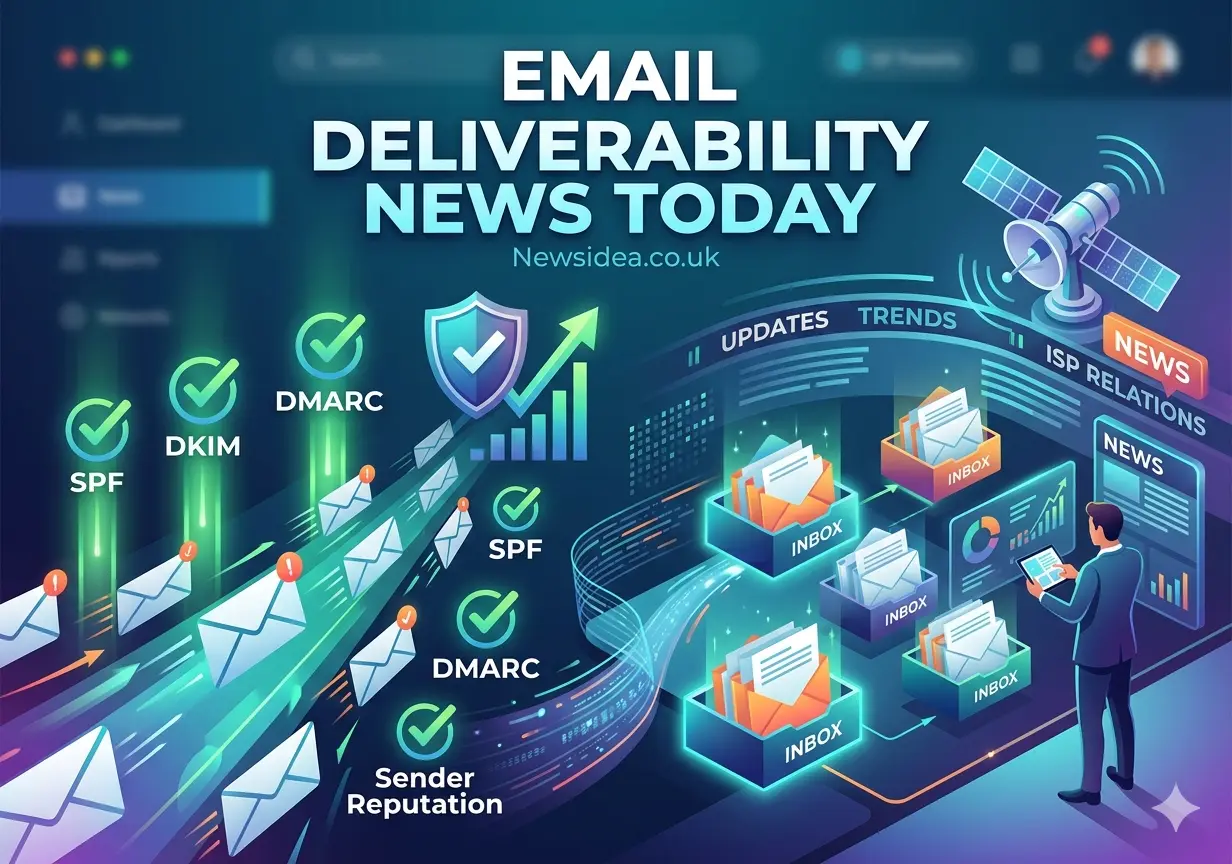
One major update involves stricter authentication requirements. Email platforms now expect senders to properly configure SPF, DKIM, and DMARC records before messages can be trusted. These security measures verify that a sender is legitimate and protect recipients from phishing attempts. According to recent Email Deliverability News Today, senders without proper authentication may face increased rejection or spam placement. Small businesses are especially affected because many have not yet updated their technical settings. Correct implementation can significantly improve inbox placement and brand credibility.
Gmail and Yahoo Introduce Tougher Rules
Gmail and Yahoo have introduced stricter rules for bulk email senders, changing the way marketers approach campaigns. Senders distributing large volumes must maintain low complaint rates and provide one-click unsubscribe options. This move aims to improve user experience and reduce unwanted messages. In current Email Deliverability News Today, experts highlight that businesses sending thousands of messages per day must carefully monitor subscriber engagement. Companies that continue using outdated practices may notice declining performance as providers apply more aggressive spam filtering systems.
AI Is Influencing Spam Filter Decisions
Artificial intelligence is becoming a major factor in email filtering systems. Mail providers now use machine learning to analyze message patterns, sender history, and recipient behavior. These systems can identify suspicious emails faster than traditional filters. The latest Email Deliverability News Today suggests that AI can detect subtle warning signs such as repetitive subject lines or sudden spikes in volume. This means marketers must create more personalized campaigns and maintain consistent sending patterns. Smarter filtering technology is making quality content more important than ever before.
Engagement Metrics Are Now Critical
Email engagement has become a stronger ranking factor for inbox placement. Providers monitor whether recipients open messages, click links, reply, or delete emails without reading them. Positive engagement signals trust, while negative actions can hurt future delivery rates. Recent Email Deliverability News Today emphasizes that inactive email lists can damage performance over time. Businesses are now focusing on list cleaning and segmentation to maintain healthy engagement. Sending relevant content to interested subscribers helps improve reputation and supports stronger long-term deliverability results.
The Rise of BIMI for Brand Visibility
Brand Indicators for Message Identification, known as BIMI, is gaining attention among marketers. This technology allows verified companies to display their logo beside emails in supported inboxes. It helps recipients recognize trusted brands instantly. In the newest Email Deliverability News Today, BIMI is viewed as both a branding and security improvement. Although adoption remains limited, more businesses are exploring it as a way to increase trust and improve open rates. As security expectations rise, visual verification could become a standard practice.
Common Deliverability Mistakes Businesses Still Make
Many businesses continue making avoidable mistakes that harm deliverability. Purchasing email lists, sending too frequently, and ignoring unsubscribe requests can quickly reduce sender trust. Some companies also fail to remove invalid addresses, leading to high bounce rates. Experts in Email Deliverability News Today consistently warn against these practices because mailbox providers closely monitor sender behavior. Marketers who prioritize permission-based communication and list hygiene usually achieve stronger results. Avoiding these mistakes can preserve domain reputation and support better campaign performance.
Future Outlook for Email Deliverability
The future of email deliverability will likely involve stricter standards and smarter filtering. Privacy regulations, consumer expectations, and provider policies will continue shaping how messages are delivered. Businesses that adapt early can stay ahead of these changes. Current Email Deliverability News Today shows that successful senders are investing in authentication, personalization, and data management. Deliverability is no longer just a technical issue; it has become a strategic priority. Companies that treat inbox placement seriously will have a stronger competitive advantage.
FAQs
What is email deliverability?
Email deliverability refers to the ability of an email message to successfully reach a recipient’s inbox instead of being blocked or sent to spam folders.
Why is email authentication important?
Authentication verifies that a sender is legitimate. Proper setup of SPF, DKIM, and DMARC helps mailbox providers trust incoming messages.
How can businesses improve inbox placement?
Businesses can improve placement by cleaning email lists, personalizing messages, monitoring complaint rates, and using proper authentication settings.
Does engagement affect deliverability?
Yes, higher open rates and clicks show providers that recipients value the content, which can improve future inbox placement.
What is BIMI in email marketing?
BIMI allows verified brands to display their logo in inboxes, improving trust and recognition among recipients.
Conclusion
The latest Email Deliverability News Today highlights how rapidly email marketing standards are changing. Stronger authentication, AI-driven spam filters, and growing emphasis on engagement are reshaping inbox success. Businesses that ignore these changes risk lower visibility and weaker campaign performance. By focusing on technical compliance, subscriber trust, and relevant content, marketers can improve deliverability and maintain strong communication with their audience. As inbox providers continue evolving, staying informed about deliverability trends will remain essential for long-term email marketing success.